We want to create the biggest online listing collection of Floating homes around the world!
Please add you short stay floating home rentals now.
Why stay in a normal house when you can stay on something special. We have selected the most beautiful floating houses from around the world, so that you can enjoy your holiday while enjoying the freedom of floating on the water !
10 Floating homes found
Asia
India
Malaysia
Maldives
Thailand
United Arab Emirates
List your floating home on this page?
Add linkFloating homes: how to choose and enjoy a stay on the water
There is a particular kind of quiet that only exists on the water. The light moves across the ceiling, ducks or herons pass right under the window, and at night you hear only the water. A floating home gives you that experience without having to steer, anchor or navigate anything. The house stays where it is, moored to a quay, a jetty or a set of posts, and you simply live on the water for a while.
This page collects floating houses, water villas and moored houseboats that are rented out by their owners. Below is a practical look at the types, daily life on board and what to check before you book.
A worldwide tradition of living on the water
People have lived on lakes, rivers and harbours for as long as there have been settlements near water. Today's floating rentals grow out of many different traditions:
- Canal houseboats in Amsterdam, where converted barges and purpose-built floating houses line the canals and have become part of the character of the city.
- Floating home communities on the west coast of the United States, such as the colourful houses on Lake Union in Seattle and the houseboat docks of Sausalito on San Francisco Bay.
- Kashmir's houseboats on Dal Lake near Srinagar, ornate wooden boats moored along the shore and reached by small shikara boats.
- Kerala's backwater houseboats in southern India, built in the style of traditional rice barges. Many cruise gently during the day, but they spend the night moored along the palm-lined canals, and some are rented as stationary stays.
- Floating villages in Southeast Asia, for example on the Tonlé Sap lake in Cambodia, where whole communities live in houses that rise and fall with the seasons.
- Floating cabins and lake houses in Canada, Australia and New Zealand, often tucked into sheltered bays and inlets.
- Modern water villas in the Maldives and other tropical destinations. Many of these stand on stilts above a lagoon rather than truly floating, but they offer the same feeling of sleeping over the water.
Floating home, houseboat or water villa?
The words are often used loosely, so read listings carefully. A floating home is usually a house built on a floating base, such as concrete or steel pontoons, with no engine, so it cannot move under its own power. A houseboat may be a former working boat converted into living space, and some can still sail, even if the rental keeps them moored. A water villa or overwater bungalow is often fixed on piles above the water. All of them stay put, so there is no skipper's licence and no mooring manoeuvres to worry about.
What daily life on board feels like
Movement. Most floating homes in sheltered canals and marinas move very little. You might notice a gentle sway when a larger boat passes or when the wind picks up, and some guests find it soothing. If anyone in your group is prone to motion sickness, a house on a quiet canal or a pile-supported villa is a safer choice than a floating house on open water.
Space. Floating homes are built to a footprint, and that usually means compact kitchens, narrow stairs, steep ladders to a sleeping loft and small bathrooms. Clever storage makes it work, but pack light and bring soft bags rather than hard suitcases.
Water and waste. Some floating homes are connected to the mains water supply and sewer, just like a house. Others rely on tanks for fresh water and waste, which means shorter showers and care with what goes down the toilet. Special marine toilets can block easily if anything other than toilet paper is flushed.
Heating. Water keeps the air cool and damp. In colder months, check how the home is heated and whether it is well insulated.
Safety with children and pets
Water all around is part of the charm, but it also calls for attention. Young children should never be on decks, jetties or gangways without an adult, and it is wise to ask whether the house has railings on all sides, lockable doors to the deck and life jackets in children's sizes.
Dogs usually adapt quickly, but a gangway with open sides or a slippery pontoon can be a challenge. Check whether pets are allowed, and think about how your dog will get on and off the boat and where it can go for walks.
For adults, the main risks are simple: slippery decks after rain, low doorways, steep stairs and stepping on and off in the dark. Wear shoes with good grip and keep a torch handy at night.
Getting on board
Access varies a lot. Some floating homes are reached by a wide, level jetty, others by a narrow gangway that tilts with the water level, and a few only by a short boat ride, as on Dal Lake. If you travel with heavy luggage, small children, older relatives or anyone with limited mobility, ask for photos of the entrance and find out how far it is from the nearest parking or taxi drop-off point.
Weather, wind and the seasons
Weather feels closer on the water. Wind can make a floating home creak and rock, and storms can be loud. In summer, decks are wonderful for swimming, paddling and long evenings outside, while in winter a warm floating home on a frozen or misty canal has its own magic. Remember that seasons are reversed in the Southern Hemisphere, so the summer season on lakes in Australia and New Zealand runs roughly from December to February. In tropical regions such as Kerala, Cambodia or the Maldives, the monsoon and dry seasons matter far more than temperature, affecting water levels, rain and the calm of the water.
Questions to ask before you book
- Is the home truly floating, on piles, or a boat that can still sail?
- How do I get on board, and is the gangway or jetty suitable for luggage, children or reduced mobility?
- Are there railings, life jackets and a safe place for children to play?
- Is the water supply and toilet connected to the mains, or does it use tanks?
- How is the home heated or cooled, and how well is it insulated?
- Are pets welcome, and is there somewhere nearby to walk a dog?
- Can we swim, fish, or use a canoe or kayak from the deck, and is equipment provided?
- Where can we park, and how far is the nearest shop or public transport?
- How much movement should we expect in wind or when boats pass by?
Being a good neighbour on the water
Many floating homes sit in residential communities where the people next door live on the water all year round. Sound travels far across water, so keep voices and music low in the evening. Follow the local mooring and harbour rules, which may cover things like where you can swim, whether you can tie up a rowing boat, and how rubbish is collected. Never throw anything overboard, including food scraps, and use eco-friendly soaps if the host asks for them. These small habits keep the water clean and the neighbours welcoming.
Tips for a great stay
Bring binoculars for birdwatching from the deck. Keep phones and keys in a zipped pocket when you are outside, since anything dropped between the planks is usually gone for good. And plan at least one day with nothing on the agenda: some of the best moments on a floating home are simply watching the light change on the water.
Finding your floating home
The floating homes on this page are grouped by continent, country and region, so you can browse the waters that interest you most. Each link leads to the owner's own website, where you can check availability and book directly. Do you rent out a floating house, water villa or moored houseboat? Add your link for free with the button above and let travellers discover your place on the water.
Looking for an awesome place to spend your holiday?
Or want to advertise your houseboat, lighthouse, treehouse or glamping?
Check these links below!
Blog posts
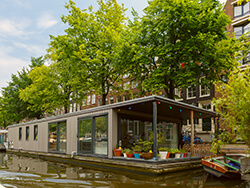
Rent a houseboat in Amsterdam
A houseboat is a great place to stay when visiting Amsterdam. Stay close to the city center but have a lot of private space.
Read more..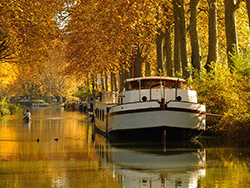
Barge river cruises in France
River cruises in France are the next luxury holiday destination. Cruise your private barge with cook down the French rivers.
Read more..